RTX BBN Technologies leads multi-team effort to demonstrate secure, real-time spectrum coexistence for 5G, defense radar
Team to build prototype that protects defense radars when the 3.1 to 3.45 GHz band is opened for commercial use
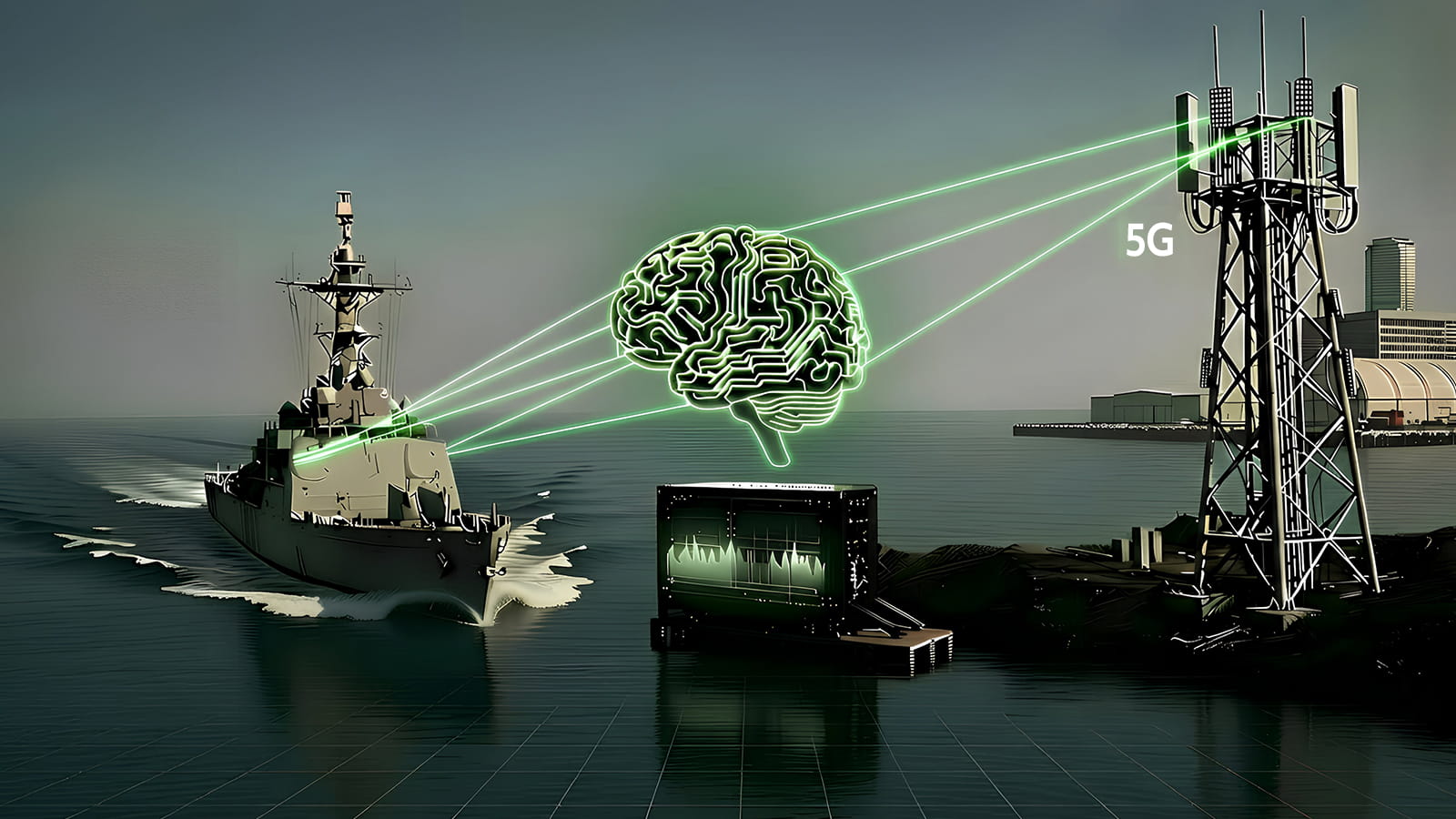
CAMBRIDGE, Mass., Feb. 10, 2026 /PRNewswire/ -- RTX's (NYSE: RTX) BBN Technologies has been awarded a contract by the Department of War (DoW), in partnership with the National Spectrum Consortium, to support its Advanced Spectrum Coexistence Demonstration program. This initiative addresses concerns about maintaining the operational readiness of critical national security radars when they share the same radio frequencies with commercial 5G networks.
Current spectrum coexistence tools can take tens of minutes to detect interference, negotiate a new allocation, and reconfigure radios. This delay leaves both commercial 5G users and incumbent radars vulnerable to service loss or unsafe operations. In the program's first phase, the BBN-led team will create a basic "smart spectrum manager" that can detect when a radar is operating and predict whether a 5G signal might interfere and automatically shift 5G traffic to avoid issues in seconds.
In the second phase, the project will evolve from a basic working model to a more advanced prototype equipped with cutting-edge tools to ensure radar and 5G networks can share the same frequencies reliably and seamlessly. These tools will transform the system into a smart, self-managing platform that follows preset rules to automatically optimize spectrum sharing. Once developed, this platform can be deployed on operational radars and 5G systems, allowing them to work safely, securely, and efficiently side by side, with little need for human involvement.
"Lives are put at risk when a radar misses a target, whether it's a ship navigating waters or a rescue team tracking a storm," said Chris Vander Valk, BBN principal investigator for the effort. "Our work ensures those radars stay reliable, even as 5G frequencies become increasingly congested, so public and private shared use of the spectrum is optimized for all users."
The multi-team effort brings together the expertise needed for a comprehensive solution:
- Raytheon Advanced Technology will provide real radar signals and test equipment.
- Ericsson Federal Technologies Group will contribute 5G network expertise to ensure feasibility of transition.
- Signal Processing Technologies will share advanced interference cancellation, detection and localization techniques.
- Federated Wireless will bring dynamic spectrum management capabilities to optimize shared spectrum usage.
- Purdue University will deliver advanced signal processing and machine learning (ML) models for faster interference predictions.
- Novowi will offer ML-based techniques for real-time spectrum sensing, classification and localization, as well as security analysis.
BBN will integrate these components into a system for future government use and will incorporate a risk management function to balance potential impacts on incumbent and commercial operations.
The team hopes to achieve a 50% increase in usable commercial 5G capacity, a 20 dB drop in unwanted interference to radars, and a 1,000-fold improvement in 5G link quality when both systems operate side by side. To accelerate the transition, the team will also deliver a "sandbox" version of the spectrum access system that can run in the cloud or at the edge of the network, simplifying the move from testing to real-world deployment.
If successful, the system will turn a longstanding "either/or" dilemma—protect the radar or grow 5G—into a "both/and" solution, expanding the nation's digital economy while preserving national security. Work will be performed in Cambridge, Massachusetts; Marlborough, Massachusetts; Plano, Texas; Vienna, Virginia; Merrimack, New Hampshire; Arlington, Virginia; West Lafayette, Indiana; and Brookline, Massachusetts.
This effort was sponsored by the U.S. Government under Other Transaction number W15QKN-21-9-5599 between the National Spectrum Consortium (NSC) and the Government. The U.S. Government is authorized to reproduce and distribute reprints for Governmental purposes notwithstanding any copyright notation herein. The views and conclusions contained herein are those of the authors and should not be interpreted as necessarily representing the official policies or endorsements, either expressed or implied, of the U.S. Government.
About RTX BBN Technologies
Founded in 1948, RTX BBN Technologies provides advanced technology research and development with a focus on national security priorities. From the ARPANET to the first email, through the first metro network protected by quantum cryptography, BBN consistently transitions advanced research to produce innovative solutions for its customers. BBN takes risks and challenges conventions to create solutions in analytics and machine intelligence, networks and sensors, intelligent software and systems, and physical sciences.
About RTX
With more than 180,000 global employees, we push the limits of technology and science to redefine how we connect and protect our world. With industry-leading capabilities, we advance aviation, engineer integrated defense systems for operational success, and develop next-generation technology solutions and manufacturing to help global customers address their most critical challenges. The company, with 2025 sales of more than $88 billion, is headquartered in Arlington, Virginia.
For questions or to schedule an interview, please contact [email protected]
SOURCE RTX