How Raytheon is ramping production of the SM-6® missile
A production sprint for a critical munition has given rise to what’s possible
Raytheon is embarking on a multiyear effort to ramp up production of the SM-6 missile – one of several munitions the business is producing at accelerated rates in a series of contracts with the Department of War.
The SM-6 team is strengthening the pipeline of parts, evaluating the value stream and helping suppliers become more resilient – all in a push to produce hundreds of rounds annually within the next several years.
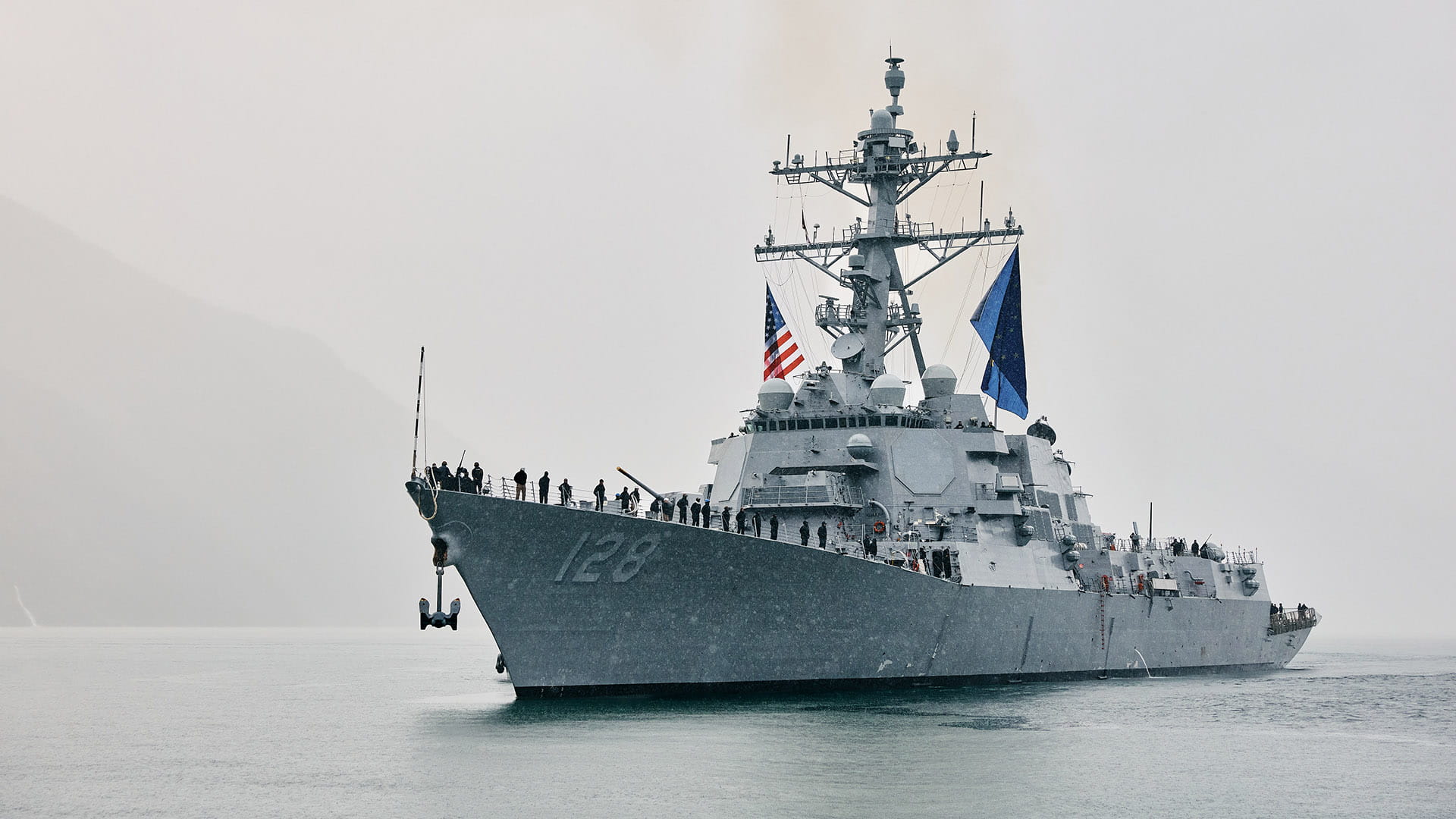
As an early exercise in that effort, the team pulled off a three-month production sprint, with support from the U.S. Navy, to test its own capacity to produce the missile – an offensive and defensive munition that can launch from land, from ships at sea and from the F/A-18 E/F Super Hornet fighter jet.
Here’s a look inside that sprint, and what it could mean moving forward.

Fast track: Critical munitions
Read about the agreements between Raytheon and the Department of War.
“This wasn’t a normal hurry-up. It was ‘The country needs hardware.’”
Paul Borboa | Senior Director | Raytheon
Planning the sprint
The team’s first step was to huddle. They pulled together experts in operations, engineering, supply chain and quality to answer critical questions: how much hardware was on hand, how ready suppliers were to send more and how much production capacity the factory could support.
“This wasn’t a normal hurry-up. It was ‘The country needs hardware,’” said Paul Borboa, who at the time was a senior director for Naval Standard Missile Systems at Raytheon, an RTX business.
The challenge from the Navy was broad and undefined: Make as many rounds as possible, as quickly as possible. After considering a few benchmarks, the team picked the highest one, then set up a 90-day production tracker to gauge progress, right down to individual parts.
“To hit the goal, the mindset was simple: Don’t look at the top of the mountain. Look at the step in front of you,” said Abel Ghanooni, executive director of Naval Standard Missile Systems at Raytheon. “Win today, then win tomorrow.”
Executing the surge
Next, it was time to put the plan into action.
The team took special short-term measures to secure higher-than-normal supplies of parts – and as full kits came in, the line came alive.
“You need all the parts – every single one – or you cannot build a missile,” Borboa said. “When everything showed up at once, we finally saw what the line could actually do.”
Even at surge pace, the team maintained the full SM-6 missile acceptance test regimen. Quality assurance and test teams expanded staffing and extended shifts, including weekends, to keep up.
From there, the focus was simple: keep the line moving.
Every morning, leadership teams from production and hardware management set the day’s agenda based on a visual management board that showed real-time, color-coded status of each major value stream. Green meant things were good. Yellow meant they were at risk. Red meant they were blocked.
“We moved fast,” said Cedric Macadangdang, SM-6 missile production director for Naval Standard Missile Systems at Raytheon. “If something popped up, it got solved that day.”
Suppliers and colleagues across Raytheon facilities matched the urgency. There were calls every morning, on-site visits when needed, and three daily shifts, including weekend work, at the Huntsville, Alabama, missile integration site.

Raytheon has completed a $115 million, 26,000-square-foot expansion in Huntsville, Alabama, that increases production capacity by more than 50% and supports more than 2,200 employees.
The factory completed a run of missiles in the first month, and production surged even higher in the second.
“It was like watching a race,” Borboa said. “You’re in first, the finish line’s right there, and the team was going to make it work.”
Adding to the excitement, the team leaned in on a longstanding tradition. Every time they finished a round, they rang a bell.
“Everyone listened for it,” Macadangdang said. “Every ring meant one round closer.”
On the final day of the window, the counter hit the target number.
Then they made one more.
“Holy smokes, we did it,” Borboa said.
Moving forward
With the goal met, the team is building on its momentum and advancing on its plan to increase annual production through 2030.
“The urgency didn’t end,” Ghanooni said. “The team kept their foot on the gas.”