
Moving faster by working smarter
From AI analysis to a global network of connected factories, RTX uses advanced technology to increase production and quality
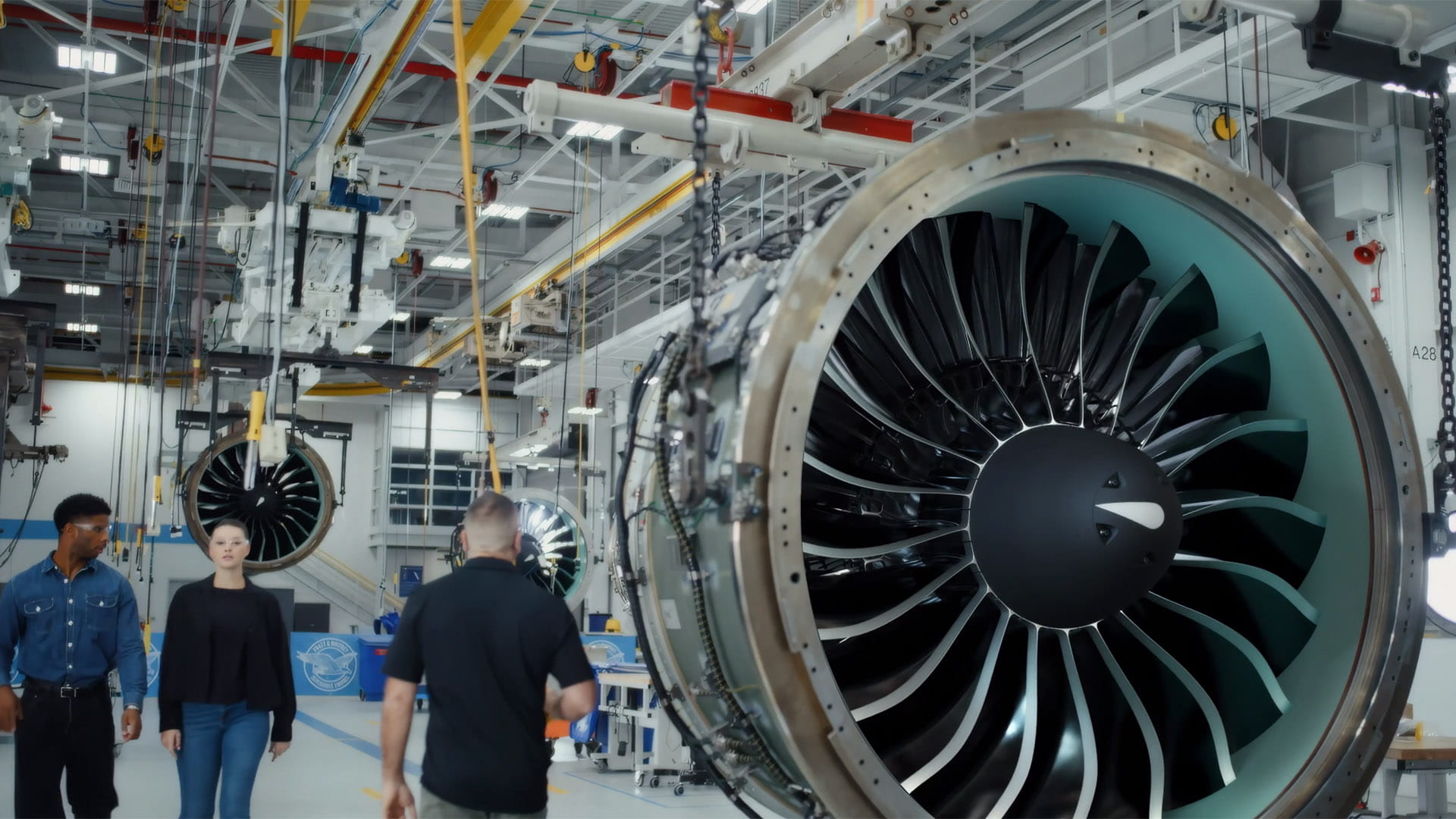
The Pratt & Whitney GTF™ engine has racked up 50 million hours of service since its first commercial flight a decade ago.
And with that achievement has come 50 million hours’ worth of flight data – information engineers at Pratt & Whitney, an RTX business, are now using to drive improvements in the current fleet and future engine iterations. The GTF is already the most fuel-efficient engine available for single aisle aircraft, but Pratt & Whitney’s engineers believe leveraging this data can make it perform even better.
That tactic reflects a broader approach across RTX to do something others can’t: Use troves of proprietary data, culled from decades of testing and real-world operation, to make new products better and improve their manufacturing and service facilities around the world.
“There’s a lot of amazing tools and technologies out there,” said Dayan Anandappa, the company’s chief data and AI officer, “But what matters most is our customers and our products. We’re delivering capabilities that drive the value our customers care about.”
An unmatched proprietary data advantage
Insights drawn from the GTF’s 50 million hours of flight data have allowed Pratt & Whitney to increase productivity. During 2025, maintenance, repair and overhaul (MRO) output increased significantly, thanks in large part to the ability to make data-driven decisions about parts allocation. Using real-time service and fleet performance data in conjunction with AI-based tools, managers are now able to direct thousands of parts transactions swiftly, maintaining a steady flow.
“If we increase the amount of flight hours before the engine needs to come off-wing for service by a day, a week or more, then we deliver significant value back to the customer,” said Anandappa.
Pratt & Whitney engineers draw these insights from RTX’s proprietary data platform, which connects hundreds of enterprise systems, tens of thousands of shop floor machines, and millions of hours of product performance data. To build this platform, Anandappa said, RTX collaborated with “hyperscalers” – best-of-breed cloud providers – to create systems that satisfy government standards and are robust enough for RTX’s team members to use daily.
“Our GTF aftermarket teams know their business like no other,” he said. “By combining their experience with the data on this platform, they can make faster, more proactive decisions.”
Use of this proprietary data platform has been crucial to development of the Pratt & Whitney GTF Advantage™ engine, an advanced design that will deliver more thrust and double the time each engine can spend on-wing before undergoing service. As data from these engines starts to come in, it will be fed back into the system, allowing for future improvements.
“It’s better to deliver 20 AI initiatives that scale than 40 with only fractional impact. Value beats volume every time.”
Vince Campisi | Chief digital officer | RTX
Artificial intelligence that delivers
RTX introduces AI through careful collaboration between engineering and digital teams, identifying how the technology will help them make better products faster. The company doesn't aspire to simply use AI – it aspires to use AI where it’s likely to have broad and meaningful impact.
“It’s better to deliver 20 AI initiatives that scale than 40 with only fractional impact,” Vince Campisi, RTX’s chief digital officer, said. “Value beats volume every time.”
Raytheon, for example, is using data and AI to speed up what’s known as first article inspection – an important but cumbersome step to ensure that a supplier’s production process consistently produces parts that meet design, quality, and regulatory standards.
Traditionally, contractors would spend hours combing through technical documents provided by suppliers to compare the supplier’s production process to the specifications of the part Raytheon ordered. They would then flag errors such as missing data or discrepancies in the specifications.
Today, Raytheon has begun using AI tools to perform that manual step. The tools produce a report for a human inspector, who reviews it and determines whether the documentation is acceptable or must be sent back to the supplier. That, in turn, helps prevent costly and time-consuming delays in manufacturing and testing.
A global network of connected factories
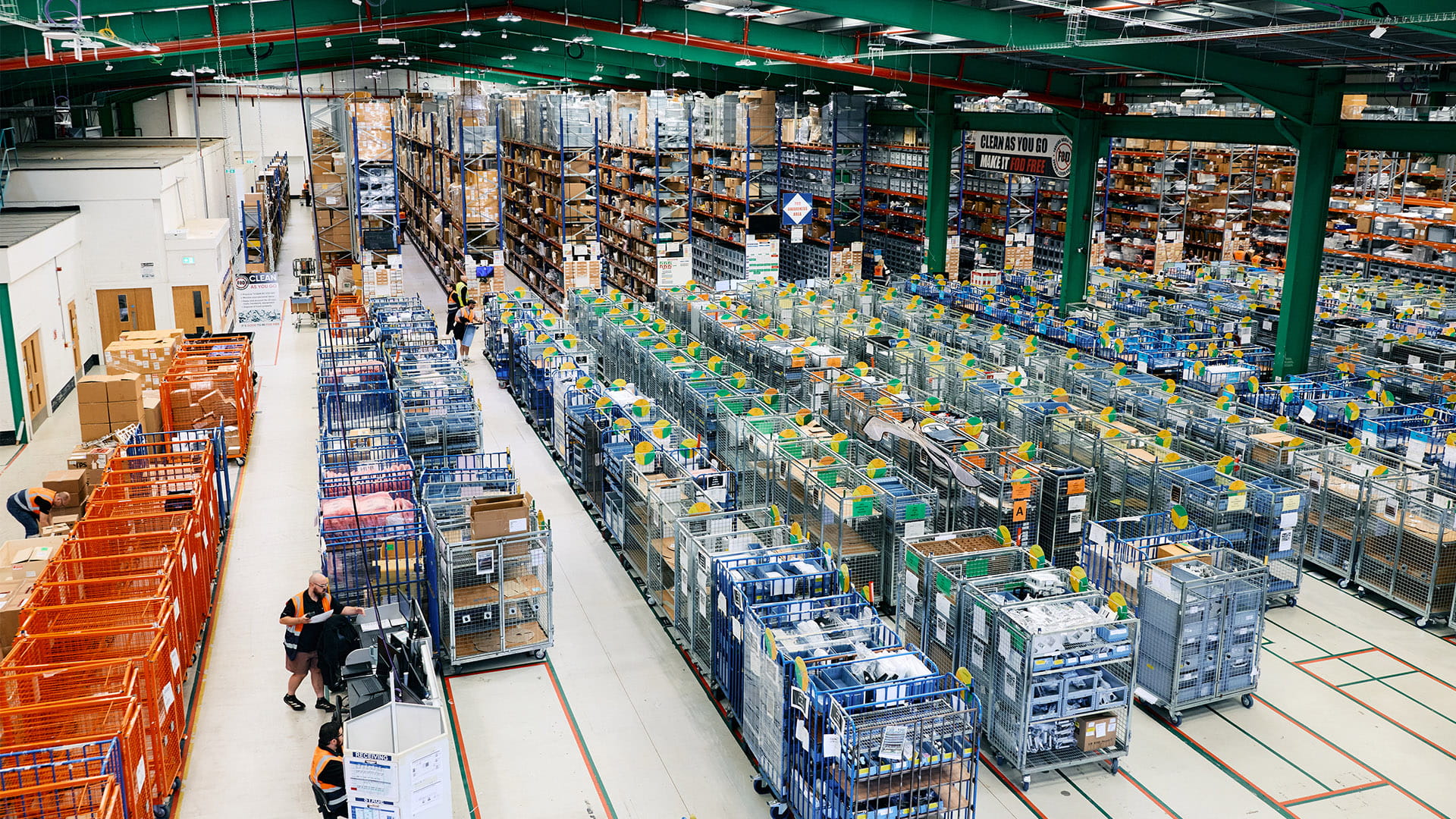
RTX factories around the world are connecting their machinery to the company's data platform, producing insights they're using to improve operations and deliver more value for customers.
At a factory that makes commercial airplane seats in Kilkeel, Ireland, for example, a team from Collins Aerospace, an RTX business, combined several kinds of data, then fed it to a simulation tool. That tool identified bottlenecks that the team then solved to reduce production time and free up 4,000 square feet of floor space.
Other sites are achieving similar results as part of a companywide effort to make engineering and operations more efficient through the use of data. To maximize the impact of that effort, the company prioritized about 60 factories that represent more than three quarters of RTX's production.
New opportunities to leverage data and AI continue to emerge, maturing processes at sites across RTX. But the end game remains the same, Anandappa said. “It comes down to two things: drive up yield and improve quality,” he said, “so we are delivering on our commitment to innovate for customers.”