The Truth About Maintenance Program Buy-in for Overhauled Engines
By Pratt & Whitney Customer Service
If you buy an aircraft with freshly overhauled engines, does it mean there will be zero buy-in for a maintenance program? It depends. Our expert has the details.
The Significance of Life-limited Parts
In aircraft transactions involving recently overhauled engines, both the buyer and seller may assume that there will be no cost for buy-in to an engine maintenance plan. However, depending on the coverage level held by the previous owner or if the engine was not on a program, it may not always be the case.
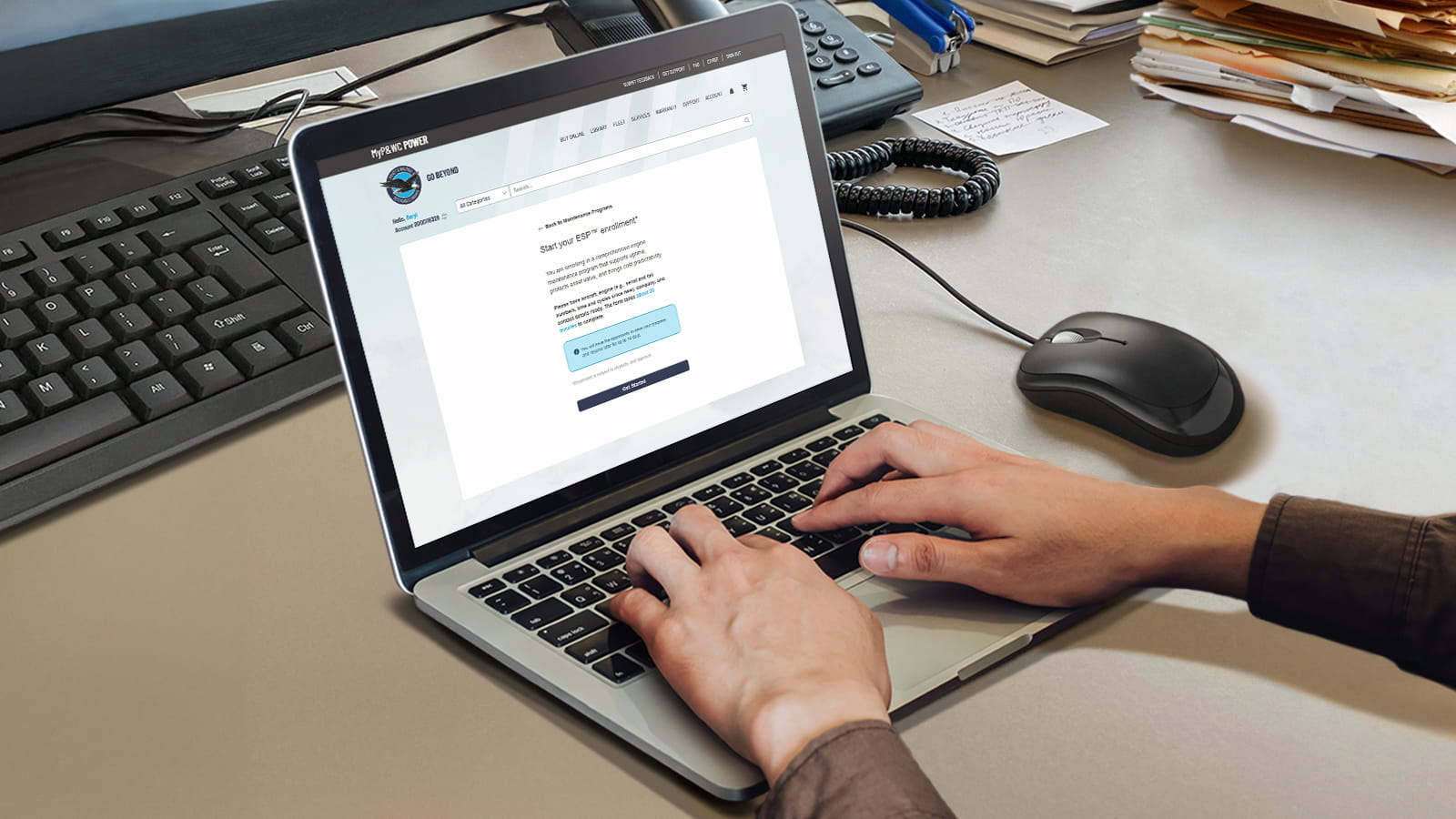
“A potential situation involves a buyer who purchases a mid-size business jet with mid to high total time on the airframe and freshly overhauled engines,” says a Senior Manager from ESP Sales. “Once the transaction is complete, the buyer initiates enrollment in a full-coverage maintenance program—only to be told there will be a significant buy-in. Understandably, the outcome is an unhappy new owner.”
The parts category that contributes most to the cost of buy-in, Delray explains, is life-limited parts. These parts, such as the rotating wheels and discs in the engine, typically have a life in the range of 7,000 to 15,000 cycles.
LLPs and Maintenance Costs
For aircraft with higher hour-to-cycle ratios, many LLPs will likely make it to the end of the economic life of the airframe, so some owners may elect to opt out of this additional program coverage. For example, if the hour-to-cycle ratio is around 2:1, an LLP with a limit of 15,000 cycles won’t expire until about 30,000 hours. The aircraft will probably be out of service by that point.
However, an often overlooked point about LLPs is that they can be required to be replaced for other reasons than cyclical limits, such as environmental impact (corrosion, erosion, etc.) as well as wear and tear beyond the limits.
You can read more of Delray’s advice in Maintenance Programs: A Prerequisite for Pre-Owned Aircraft Operators.