
Charging ahead: The new architecture of hybrid electric propulsion
By Michael Winter, RTX Chief Scientist
The challenges and opportunities of electrifying flight remain significant. Batteries can be almost 40 times heavier to carry the same energy content as jet fuel, making all-electric flight difficult beyond very low ranges and payloads. There are, however, exciting ways to combine hybrid-electric elements into today’s propulsion system systems, delivering energy savings and value to our customers. At RTX, we are uniquely positioned to take advantage of these opportunities with Collins Aerospace as the pre-eminent supplier of generation and distribution of electricity in flight, and Pratt & Whitney’s market position for providing propulsion system solutions in small aircraft, helicopters and large airliners.
At Collins Aerospace, we are developing motors, generators, drives, distribution systems and all the elements needed for mild hybrid-electric applications. By combining these technology building blocks into our world-class propulsion systems, we can best meet any mission by reimagining the gas turbine engine as a cyber-physical machine. We harness the electrical elements to deliver thrust under off-design and transient conditions, while managing long-haul steady state operation through consuming fuel. We realize efficiency through optimal design by avoiding all of the inefficient operating states.
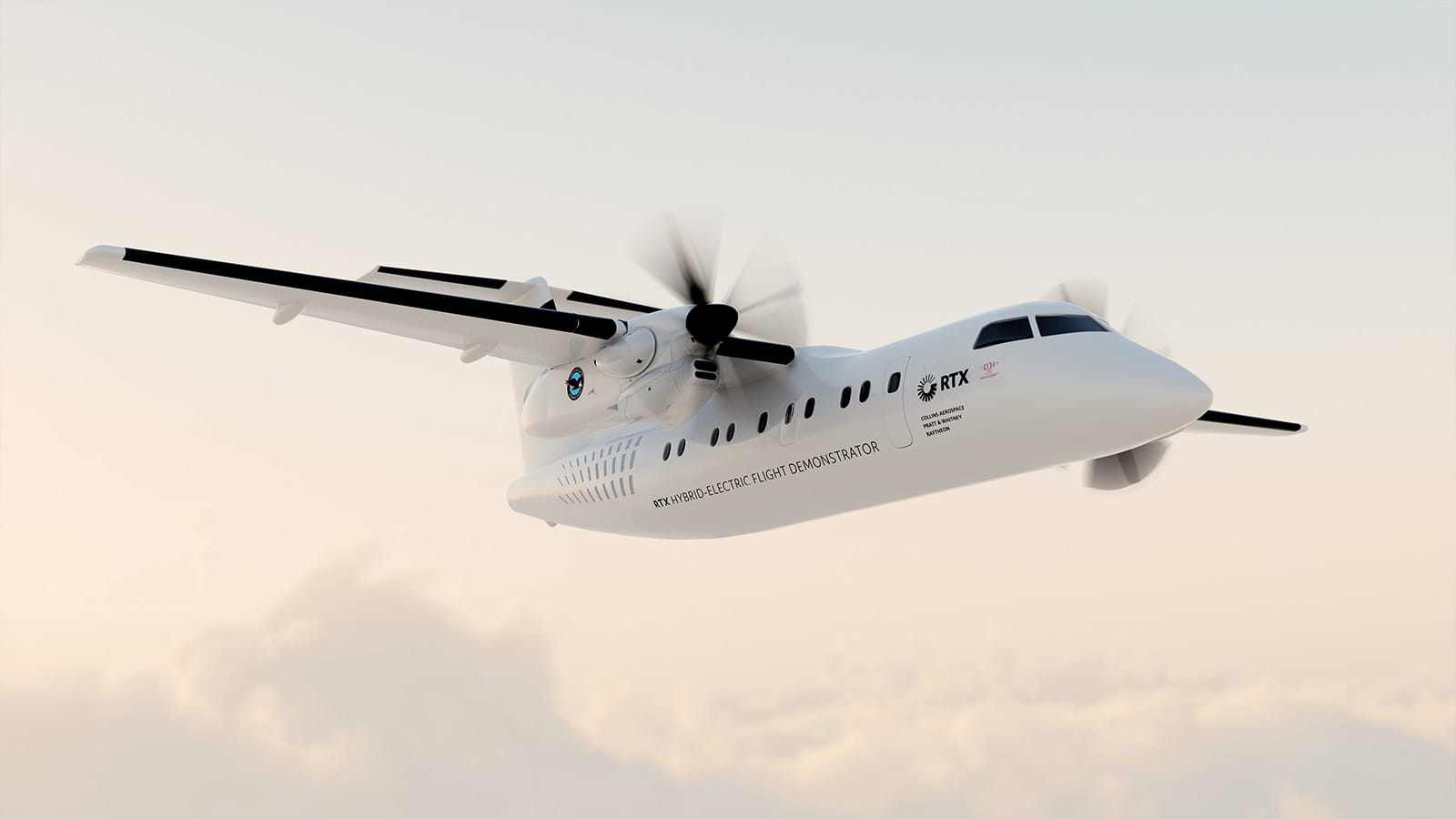
At RTX, we have the best systems engineers that can integrate these technologies into aircraft demonstrators across all domains of flight. FromScalable Turboelectric Powertrain Technology (STEP-Tech) for urban air mobility, power supplementation for the Airbus PioneerLab helicopter demonstrator, multiple applications in Pratt & Whitney Canada’s regional turboprop segment, including the RTX Hybrid-Electric Flight Demonstrator, and ultimately in the heart of the market for single aisle propulsion with SWITCH.
These exciting technological demonstrators will pave the way to improved customer value and greater efficiency. In each case, the value is realized not by choosing between burning fuel or consuming electrons, but by applying the best system solution. Ultimately, it is never a question about or – it is all about AND.